
Views: 0 Author: Site Editor Publish Time: 2026-09-19 Origin: Site


Sourcing textiles for the African market requires navigating specific climate demands, logistical complexities, and rigorous price-to-durability ratios. Many buyers struggle when they enter this diverse region. Generic procurement strategies often result in dead stock on retail shelves. Similarly, they lead to high replacement rates for hotels or margin erosion due to miscalculated landed costs. You need a highly tailored approach to succeed here. This guide provides a verified framework to evaluate manufacturers properly. We help you select climate-appropriate fabrics and mitigate supply chain risks when sourcing bulk bedding. You will discover practical methods to balance cost and quality effectively. We explore essential fabric specifications, strict vendor vetting protocols, and realistic freight calculations. Read on to build a resilient sourcing strategy tailored specifically for African trade landscapes.
Selecting the right Africa bedding set requires prioritizing breathable, high-durability fabric blends (like poly-cotton) that withstand local climates and industrial laundering.
Credible suppliers must demonstrate transparent MOQs, verified export compliance to African ports, and consistent quality control.
True ROI depends not just on the unit price of wholesale bedding sets, but on calculating total landed costs, including freight, import tariffs, and localized packaging requirements.
Distinguishing material specs between a home bedding set (focus on aesthetics/softness) and a hotel bedding set (focus on longevity/wash cycles) is critical for shortlisting vendors.
Standardized global specifications often fail across African regions. You cannot simply import European or North American textile standards and expect them to perform well. Different environments present distinct challenges. Coastal cities like Lagos and Mombasa experience intense, year-round humidity. Inland locations like Johannesburg encounter dry heat and distinct seasonal drops in temperature. Furthermore, local washing habits vary wildly. Some markets rely heavily on sun-drying, while commercial operators use aggressive industrial chemical treatments. These factors make climate-driven material selection a non-negotiable success criterion.
We must also frame the business problem around end-user distinctions. Retailers and hospitality buyers have inherently different needs.
Retailers and distributors focus heavily on consumer appeal. A standard home bedding set must look attractive on a store shelf. Buyers in this segment demand diverse patterns and vibrant, colorfast dyes. Retail-ready packaging is crucial. Shrink-wrapped sets featuring clear, localized sizing charts sell faster. Consumers want fabrics feeling soft immediately upon purchase, prioritizing immediate tactile satisfaction over industrial-grade longevity.
Conversely, procuring a hotel bedding set involves completely different priorities. Hospitality operators demand high-tensile strength. They require crisp white uniformity across all rooms. Commercial bed linens endure harsh industrial detergents, high-temperature washes (often exceeding 60°C), and frequent ironing. If hotel linens lack proper structural integrity, they degrade rapidly, forcing costly premature replacements. Breathability and moisture-wicking properties remain critical for both sectors to ensure comfortable sleep in warm climates.
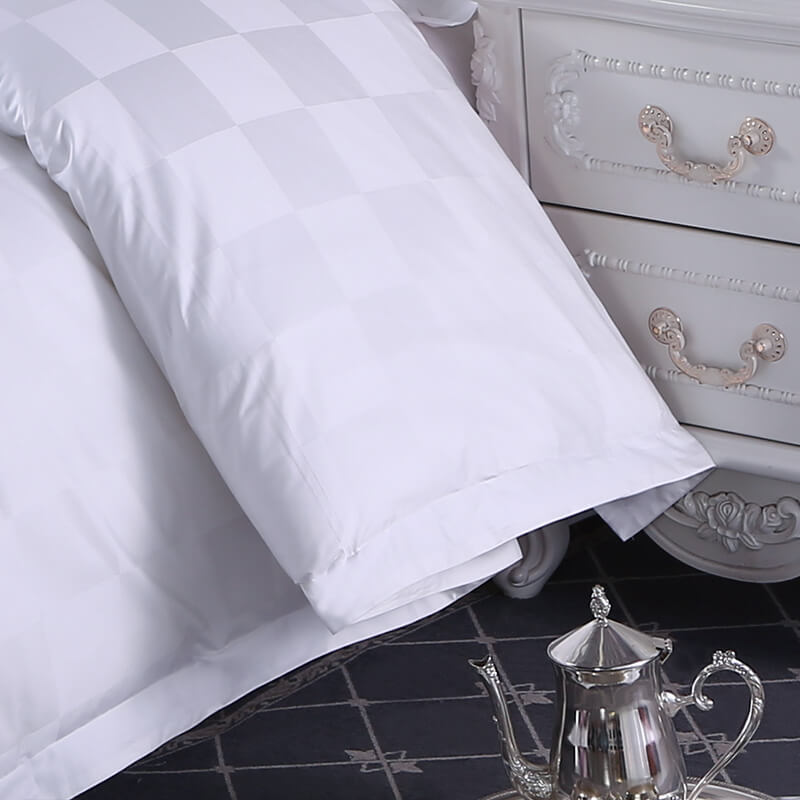
Choosing the correct material determines whether your product succeeds or fails in its target market. Buyers often face confusing marketing claims regarding fabric quality. We evaluate the most common solution categories below to separate fact from fiction.
You will primarily encounter three material types during procurement. Each serves a specific operational purpose.
Poly-Cotton Blends (e.g., 50/50 or 60/40): This represents the most pragmatic choice. Blending polyester and cotton balances cost, wrinkle resistance, and durability. The cotton provides essential breathability, while the polyester adds structural strength. We highly recommend this blend for commercial use. It withstands frequent washing and dries quickly, saving hotels massive energy costs.
100% Cotton: Pure cotton offers a premium feel. It is ideal for luxury safari lodges or high-end retail markets. However, it carries distinct drawbacks. Pure cotton poses higher shrinkage risks during laundering. It wrinkles easily, requiring extensive ironing. It also demands higher maintenance costs overall.
Microfiber: This synthetic option provides low upfront costs and fast-drying capabilities. However, you must scrutinize it carefully. Microfiber retains body heat, making it uncomfortable in humid African climates. It also tends to pill (form small fabric balls) over time, degrading the user experience rapidly.
Fabric Type | Breathability | Durability | Cost Category | Best Application |
|---|---|---|---|---|
Poly-Cotton (60/40) | High | Excellent | Medium | Hotels, Mid-tier Retail |
100% Cotton | Excellent | Medium | High | Luxury Lodges, Premium Retail |
Microfiber | Low | Low/Medium | Low | Budget Retail |
Many buyers falsely believe higher thread count automatically equals higher quality. This is a prevalent industry myth. Manufacturers often use thinner, weaker yarns to artificially inflate thread counts. Instead of chasing high numbers, focus on yarn size, weave structures (like percale versus sateen), and fabric finish. A well-constructed 250-thread-count percale bed sheet set will outlast a poorly woven 600-thread-count alternative.
Similarly, you must carefully evaluate the construction of any duvet cover set. Check the closure mechanisms (zippers versus buttons) for commercial viability. Finally, sizing standards demand strict attention. Mattress sizes vary across the continent. A South African standard double bed differs slightly from East African sizing dimensions. Failing to account for regional mattress size variations guarantees high return rates and frustrated customers.
Partnering with a reliable Africa bedding set supplier forms the foundation of your procurement strategy. You must evaluate potential vendors across several key dimensions concerning trust and capability.
First, assess production capacity and scalability. Can the manufacturer handle staggered wholesale orders during peak seasonal demands? African tourism often peaks during specific months. Your supplier must scale production rapidly without compromising quality. Ask for proof of past large-scale export operations.
Next, demand proper certifications and compliance documentation. Look specifically for OEKO-TEX Standard 100 certification. This guarantees textiles remain free from harmful substances. African customs authorities increasingly require such documentation for cross-border trade. Compliance protects your brand reputation and prevents customs seizures.
Never rely solely on factory-provided quality reports. Insist on third-party pre-shipment inspections. Reputable agencies like SGS or Intertek provide unbiased assessments. They verify seam strength, test colorfastness against rigorous standards, and measure dimensional stability (shrinkage). Finding a defect before the container leaves the port saves you thousands of dollars.
Minimum Order Quantity (MOQ) realities often challenge new buyers. Standard factories demand large upfront commitments. You must negotiate realistic MOQs for initial market testing. Once a product proves successful, you can scale up to larger volumes for long-term replenishment. Transparent suppliers will offer tiered pricing structures, allowing you to test the market safely before placing massive orders.
Manufacturing the textiles represents only half the battle. Shipping wholesale bedding sets into African ports involves significant implementation considerations and risks.
You must optimize your freight logistics carefully. Compare LCL (Less than Container Load) versus FCL (Full Container Load) options. Sourcing from major manufacturing hubs like China, India, or the UAE requires long transit times to key African ports like Durban, Mombasa, or Lagos. Consolidating orders into an FCL drastically reduces your per-unit shipping cost and minimizes damage risks at transshipment ports.
Transit packaging requires special attention due to environmental threats. Sea freight to Africa often crosses humid equatorial zones. Implement these packaging best practices to protect your investment:
Vacuum Sealing: Compress bulky items like duvets to maximize container space and reduce freight costs.
Desiccant Packs: Place industrial-grade moisture-absorbing desiccants inside every carton to prevent mildew and mold growth during long sea transits.
Double-Walled Cartons: Use reinforced cardboard boxes to prevent crushing when stacked high inside shipping containers.
Pallet Wrapping: Ensure all pallets feature thick shrink-wrap to deter moisture ingress and minor pilferage at ports.
Navigating import duties remains complex. You must ensure your supplier provides accurate HS codes (Harmonized System codes). Bed linens typically fall under HS code 6302. Incorrect classifications lead to heavy fines and port delays. Furthermore, investigate origin certificates. Understanding regional trade agreements, such as the African Continental Free Trade Area (AfCFTA) or bilateral treaties, helps you leverage reduced import tariffs, directly improving your margins.
Smart procurement requires a rigorous decision framework. Many buyers mistakenly focus entirely on the initial factory price. This approach routinely causes severe budget overruns once hidden logistical fees appear.
You must understand the difference between Unit Cost and Landed Cost. A transparent breakdown of the FOB (Free on Board) price provides only the starting point. To calculate the true landed cost, you must add sea freight charges, marine insurance, port handling fees, customs duties, and final mile delivery costs. Only then can you accurately price your products for the local market.
For hospitality buyers, evaluating ROI means analyzing the Cost Per Use. Shift your procurement mindset away from finding the "cheapest unit." Instead, calculate the "lowest cost per wash cycle." A premium poly-cotton blend might cost 20% more upfront than a budget option. However, if it survives 150 industrial wash cycles compared to the budget option's 50 cycles, the premium product delivers a vastly superior ROI over time.
To begin shortlisting your vendors effectively, follow this structured process:
Request Documentation: Ask potential suppliers for a detailed spec sheet and physical fabric swatches. Never buy in bulk without touching the material.
Conduct Wash Testing: Order a small pilot run. Subject these samples to local wash-testing using the specific detergents and temperatures common in your region.
Draft Clear Contracts: Finalize service level agreements (SLAs) regarding acceptable defect rates, strict lead times, and exact shipping incoterms.
Sourcing bedding for the African market is a strategic balance of material science, strict supplier vetting, and logistical foresight. Standardized solutions rarely survive the unique climate demands and rigorous usage patterns found across the continent. By distinguishing between retail appeal and hospitality endurance, you build a procurement strategy grounded in reality.
Buyers must prioritize vendors offering transparent pricing, verifiable quality metrics, and proven experience shipping to African destinations. Avoid chasing artificially high thread counts. Instead, focus on optimal fabric blends and exact regional sizing. Proper QA protocols and meticulous freight planning protect your investment from factory floor to final destination.
Begin your shortlisting process today. Reach out to a verified Africa bedding set manufacturer and request detailed RFQs (Request for Quotations). Ensure these documents explicitly state fabric composition, exact GSM or yarn parameters, and clear shipping incoterms to secure your supply chain.
A: Typically, it takes 30-45 days for production, plus 25-40 days for sea freight. This timeline depends heavily on the origin port and the specific African destination port.
A: Yes. Credible suppliers will manufacture a bed sheet set or duvet cover set to exact localized dimensions, though this may require slightly higher MOQs than standard stock sizes.
A: A 60/40 cotton-polyester blend in a percale weave is the industry standard. It provides the breathability of cotton with the commercial durability and quick-drying benefits of polyester.
A: Mandate a pre-shipment inspection by an independent agency to check for colorfastness, exact measurements, and thread count accuracy against the approved golden sample.


