
Views: 0 Author: Site Editor Publish Time: 2026-08-15 Origin: Site


Hospitality procurement teams face a highly delicate balancing act today. They must ensure continuous hotel brand visibility without compromising ultimate guest sleep quality. We know down-alternative bedding remains a hospitality standard for durability and hypoallergenic comfort. However, applying a logo directly to the shell introduces serious manufacturing complexities. You risk altering the tactile experience or destroying the fabric during harsh commercial laundering. This article provides an objective evaluation of how to successfully brand your assets. You will discover practical methods to maintain industrial washability while perfectly preserving fill loft. Readers will also learn how to navigate vendor capabilities, evaluate prototypes, and specify orders without sacrificing the premium feel every guest expects. We guide you through balancing visual impact against practical maintenance constraints.
Hotel logos can be successfully added to a microfiber pillow, but the application method (embroidery vs. print vs. tag) dictates the product's lifespan.
Centralized logo placement degrades sleep comfort; corner placements or custom gussets are the industry standard for in-room use.
Industrial laundering (high heat and harsh chemicals) disqualifies surface-level screen printing for long-term hospitality use.
Customized sleep products often require higher Minimum Order Quantities (MOQs) and longer lead times due to pre-production sampling (PPS) requirements.
Hotel operators must define their primary objective before ordering customized bedding. You need to carefully weigh visual branding upon room entry against subtle luxury during actual use. A large, centralized logo looks striking when a guest first walks into the suite. Yet, heavy stitching in the center of the fabric can scratch the face. It ruins sleep ergonomics entirely. You must prioritize the physical guest experience over aggressive visual marketing. Subtlety often signals higher luxury in the hospitality sector. Placing a smaller, refined logo in the bottom corner achieves both goals efficiently.
Many luxury boutiques now leverage custom-branded bedding as a highly profitable direct-to-consumer revenue stream. Guests frequently want to replicate the hotel sleep experience at home. Retail revenue increases significantly when the branding feels premium and exclusive. A well-designed Custom Hotel Pillow becomes a highly desirable souvenir. It transforms a standard room asset into a retail commodity. Properties can sell these items in their lobby boutiques or online stores. This strategy captures guests who value a tangible memory of their luxurious stay.
Properties must clearly distinguish between low-cost promotional giveaways and high-durability in-room assets. Promotional items utilize cheaper printing methods and lower-grade fabrics. They do not face daily industrial washing. Conversely, in-room assets demand rigorous quality control from the manufacturer. They must endure years of guest use and harsh laundering. You cannot use promotional-grade branding techniques on your permanent room inventory. Doing so guarantees rapid degradation. It will ultimately harm your brand image when guests notice peeling logos or frayed embroidery.
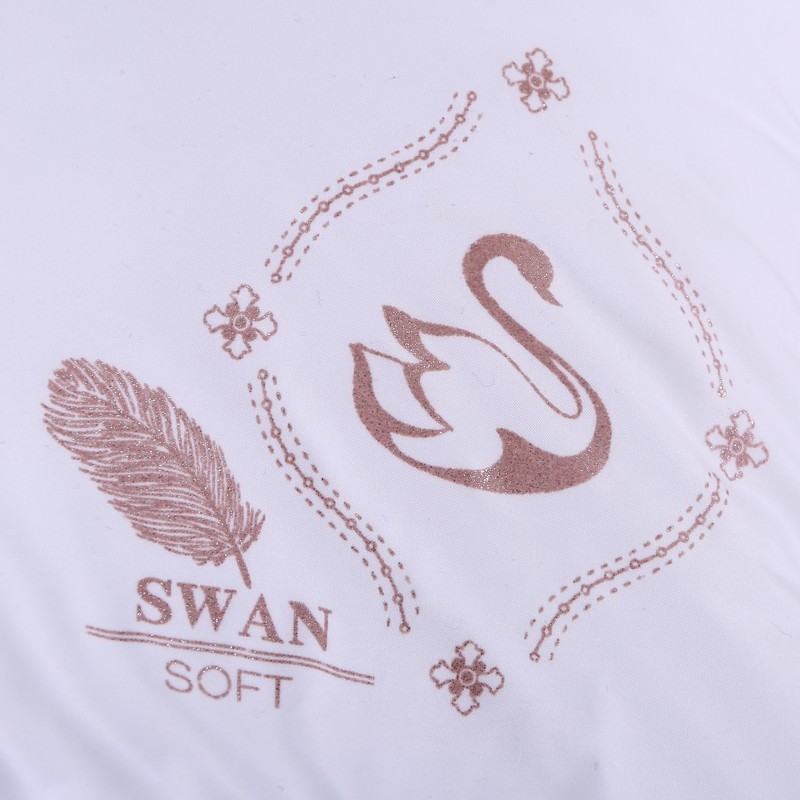
Different application methods yield drastically different results regarding durability and comfort. Corner embroidery delivers high perceived value and signals premium quality to the user. It generally survives commercial washing protocols while maintaining excellent dye integrity. However, needle punctures can severely weaken thin shells if the manufacturer uses improper backing materials. Heavy embroidery also creates a stiff, rigid surface area. You must keep it away from the primary sleep zone.
Custom woven labels and gussets offer an exceptional alternative for subtle branding. They have zero negative impact on the main sleep surface. This approach scales easily across massive enterprise orders. It provides subtle but authoritative branding sewn directly into the seam. The main drawback involves less immediate visual impact when housekeeping makes the bed. However, woven labels rarely fail under high-heat washing conditions.
Dye-sublimation and heat transfers allow for complex, multi-color logos. This modern method keeps the microfiber pillow fabric relatively soft to the touch. Unfortunately, there remains a remarkably high risk of fading and cracking. Standard hospitality laundering protocols often exceed 200 high-heat wash cycles annually. Sublimation inks and heat transfers rarely survive this harsh environment without degrading. We generally advise against this method for active in-room use.
Application Method | Primary Advantage | Major Drawback | Best Hospitality Use Case |
|---|---|---|---|
Corner Embroidery | High premium feel, extremely durable threads. | Creates a stiff area; can puncture weak fabrics. | Luxury in-room sleep bedding. |
Woven Gusset Labels | Zero impact on sleep comfort; highly scalable. | Low immediate visual impact on the bed. | Standard in-room bedding and retail inventory. |
Dye-Sublimation | Allows full-color, complex visual designs. | High risk of fading under harsh laundering. | Decorative shams or promotional giveaways. |
You must carefully analyze how brushed versus smooth shells react to industrial needlework. Brushed surfaces feel incredibly soft and luxurious. They absorb ink much differently than tightly woven, smooth weaves. Heavy embroidery on delicate, brushed fabrics frequently causes puckering around the logo. The fabric tension changes drastically. To prevent this, manufacturers must use water-soluble backing stabilizers. This ensures the fabric remains flat after the initial wash cycle.
Heavy centralized stitching severely compresses the internal fill. It ruins the structural integrity of the entire unit. Down-alternative loft relies heavily on trapped air to provide ergonomic head support. Sewing a massive logo directly through the center crushes this vital loft entirely. It creates uncomfortable, permanent flat spots. Guests will instantly notice this lack of support. Always instruct your vendor to stitch the logo onto the shell before they blow the fill inside.
You must also ensure all customized additions meet strict safety and maintenance standards. The embroidery thread, customized dyes, and backing must match the OEKO-TEX safety ratings of the base unit. They must also share identical shrinkage tolerances. If the embroidery thread shrinks at a different rate than the polyester shell, the logo will warp. It will look distorted after the first pass through a commercial dryer. Specify colorfast, high-temperature polyester threads to mitigate this exact risk.
Customization introduces entirely new variables into your standard procurement budget. You must account for initial embroidery digitizing fees. Custom dye-plate setups also incur upfront prototyping costs. These one-time fees heavily impact the overall unit price on smaller orders. Digitizing a complex logo requires specialized software. It maps out the exact needle path for the embroidery machines. Complex logos require higher stitch counts, which directly increases the manufacturing time and cost.
Understanding volume tiering remains crucial for scaling your order efficiently. Boutique properties might request initial trial runs of 50 to 100 units. Enterprise procurement teams routinely order 10,000 units or more for national rollouts. Suppliers adjust pricing heavily based on these Minimum Order Quantities (MOQs). Small orders carry a steep premium. You can significantly reduce the cost per unit by forecasting your annual needs. Consolidate your purchases into a single, massive order to unlock better factory pricing.
Lead time realities often surprise first-time hospitality buyers. The Pre-Production Sample (PPS) approval process is mandatory for customized goods. This crucial phase typically adds two to four weeks to standard textile lead times. You absolutely cannot rush this step. It guarantees your final bulk delivery matches your exact brand specifications. Factoring this buffer into your renovation or opening schedule prevents costly delays. Air-freighting a delayed bulk order will instantly destroy your procurement budget.
You must specify your exact requirements clearly to avoid costly manufacturing mistakes. Always define the precise end-use case first before selecting a branding technique. Segment your orders logically to optimize your budget and maintain quality.
Follow these core steps to specify your order accurately:
Categorize the items strictly into "display only" (shams) versus "active sleep" bedding.
Select the least intrusive branding technique for active sleep items to preserve comfort.
Specify the exact Pantone colors required for all threads or inks.
Require the vendor to provide documentation matching OEKO-TEX safety certifications.
Establish a strict threshold for maximum acceptable shrinkage during laundering.
Requesting the right Pre-Production Sample (PPS) is entirely non-negotiable. Procurement teams must physically wash-test a branded sample in their own facilities. You should wash it five to ten times before signing off on full mass production. This rigorous testing reveals hidden weaknesses in the fabric tension or stitching. It exposes cheap threads that bleed color into the pristine white shell.
When evaluating potential supplier capabilities, look specifically for these essential traits:
Proven, verifiable experience manufacturing commercial-grade linens for the hospitality sector.
In-house testing facilities dedicated to high-heat industrial wash simulations.
Transparent, realistic communication regarding a Microfiber Pillow lifespan under commercial conditions.
Willingness to produce and revise physical samples until you grant final approval.
Avoid vendors who primarily produce standard promotional merchandise. They rarely understand hospitality durability requirements. Their products look great in a catalog but fail completely in a commercial laundry environment.
Adding a logo to your hospitality bedding is a highly viable strategy. Procurement teams must prioritize guest sleep comfort and commercial durability over maximum logo visibility. For active in-room use, you should strictly opt for corner embroidery or custom woven tags to preserve ergonomics. Reserve large-scale prints exclusively for decorative shams or low-cost promotional giveaways. Your immediate next action should be requesting physical samples of customized shells from shortlisted suppliers. Evaluate the thread colorfastness and fabric tension personally before committing to any bulk purchase agreement.
A: Yes, if placed improperly. Centralized embroidery creates a stiff, abrasive surface that degrades sleep ergonomics. To prevent this, always place embroidered logos in the bottom corners or use customized gussets. This ensures the primary sleep surface remains soft and completely uninterrupted.
A: It depends entirely on the chosen branding method. High-quality corner embroidery and woven tags easily survive harsh chemicals and high heat. Conversely, surface-level screen printing and dye-sublimation often fade, crack, or peel after repeated industrial laundering cycles.
A: It can, unless you specify certified materials. The threads, dyes, and backing materials used for the logo must independently pass OEKO-TEX safety standards. If uncertified materials are used, they might introduce allergens or irritants, compromising the overall hypoallergenic nature of the product.
A: Minimum Order Quantities vary heavily by supplier and branding method. Boutique properties might find suppliers willing to do trial runs of 50 to 100 units, usually at a premium price. Enterprise-level custom orders typically start between 500 and 1,000 units to achieve proper cost-efficiency.
A: For immediate visual impact, branding the pillowcase or sham is often superior. Shams are display items and do not impact direct sleep comfort. Branding the insert itself serves primarily to prevent inventory theft and ensure brand reinforcement during laundry sorting or housekeeping changes.


