
Views: 0 Author: Site Editor Publish Time: 2026-08-05 Origin: Site


The fundamental operational tension in hospitality is very real. Guests expect pristine, luminous white linens upon check-in. But aggressive commercial laundering often degrades cotton fibers quickly. This rapid degradation drives up replacement expenses for the property. For procurement and housekeeping directors, the true challenge goes beyond simply removing stains. They must actively preserve the tensile strength of premium cotton. They also need to maintain the fabric's soft hand-feel over hundreds of harsh wash cycles. It is a delicate balancing act. By understanding the complex chemical realities of commercial laundering, hotels can overcome this hurdle. You must optimize your water quality consistently. You should also select the right weave structures during the procurement stage. Taking these precise steps allows hotels to extend the lifecycle of their linens. Ultimately, they achieve exceptional durability without ever compromising on strict visual standards.
Chemical Balance Over Harsh Bleach: Transitioning from chlorine to oxygen-based bleaches prevents the premature breakdown of natural cotton fibers.
The Role of Water Quality: Hard water mineral deposits are the primary culprit behind graying and yellowing; addressing water chemistry is non-negotiable for maintaining brightness.
Procurement Dictates Durability: Investing in high-quality structural weaves, such as Jacquard, provides higher baseline durability against commercial wash cycles compared to standard flat weaves.
Lifecycle ROI: Implementing strict pH-neutralizing steps (laundry sours) prevents chemical residue that yellows fabric during the ironing process.
Housekeeping departments face a core business problem daily. Frequent use of sodium hypochlorite achieves brilliant short-term whitening. However, chlorine bleach chemically strips cotton fibers aggressively. This harsh chemical action leads directly to micro-tears and surface pilling. Eventually, properties face the early retirement of expensive hotel bedding sets. Prematurely replacing degraded linens impacts hotel profitability heavily. Replacing inventory too often drains operational budgets quickly.
A successful linen management strategy requires strict operational balance. You need to maintain a baseline whiteness index. This index guarantees measurable guest satisfaction and brand compliance. Simultaneously, you must target a minimum cycle life for your inventory. Most premium properties aim for 200 or more commercial washes per item. Hitting this target requires moving away from outdated bleaching shortcuts. You must adopt a scientifically balanced wash chemistry. Doing so preserves fiber integrity while lifting heavy soil.
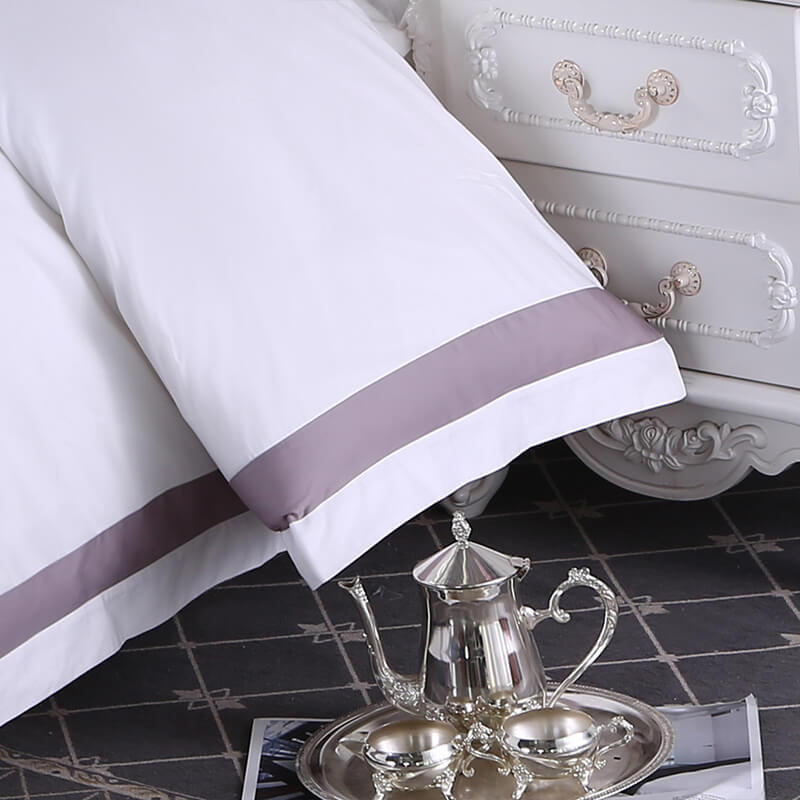
Proper temperature optimization is your first line of defense. Commercial facilities utilize thermal disinfection effectively. Water temperatures typically range from 140°F to 160°F during the cycle. This intense heat opens the natural cotton fibers safely. It allows detergents to perform deep cleaning mechanically. Thermal action reduces the need for highly aggressive chemicals. Protecting your Hotel Bedding Sets requires precise thermal management.
The debate between oxygen and chlorine bleach is critical. Hydrogen peroxide-based bleaches are significantly safer for cellular cotton structures. Oxygen bleaches oxidize organic stains thoroughly. They achieve this without breaking vital chemical bonds within the fabric. You must use oxygen bleach at higher temperatures for maximum efficacy. Chlorine, conversely, weakens fibers with every single exposure.
Comparison of Commercial Bleaching Agents
Feature | Oxygen Bleach (Hydrogen Peroxide) | Chlorine Bleach (Sodium Hypochlorite) |
|---|---|---|
Cotton Fiber Impact | Gentle, preserves tensile strength | Harsh, strips layers and causes micro-tears |
Temperature Requirement | Requires high heat (140°F+) for activation | Activates in warm or cold water |
Color Fastness | Safe for colored embroidery or trims | Fades trims, yellows pure white over time |
Disinfection Mechanism | Oxidation of cellular walls | Aggressive chemical destruction |
The "laundry sour" step is often misunderstood. Commercial facilities must use acidic sours in the final rinse cycle. This vital step neutralizes leftover alkaline detergent residues completely. If you skip this step, leftover alkali remains trapped. It then scorches and yellows under high-heat commercial ironers. This creates a permanent yellow stain masquerading as age.
Modern commercial detergents also utilize optical brighteners. These fluorescent whitening agents work via visual illusion. They absorb ultraviolet light and reflect it back as blue light. This reflection counteracts natural yellowing beautifully. It creates the illusion of pure white sheets. Best of all, they achieve this optical pop without causing structural damage.
Fabric maintenance actually begins at the purchasing stage. Your procurement strategy dictates your baseline operational durability. Long-staple cotton resists the mechanical stress of industrial washers exceptionally well. Short-staple alternatives fray and pill much faster under friction. Investing in superior raw materials extends your replacement cycles naturally.
Weave structure plays a monumental role in fabric longevity. The structural integrity of Jacquard Hotel Bedding Sets is unparalleled. These items feature integrated, loom-woven patterns directly in the fabric. This complex construction offers superior dimensional stability. They retain their shape far better than printed or superficially woven fabrics. They resist stretching and warping during commercial extraction cycles.
There is also a strong aesthetic practicality here. Jacquard weaves camouflage minor wear incredibly well. They maintain a luxury, high-end texture visually and tactilely. They withstand aggressive laundering better than delicate sateens. Sateen weaves feel silky but catch and snag easily in commercial washers.
We must also debunk the ultra-high thread count myth. Many buyers assume a 800 or 1000 thread count means higher quality. In reality, extremely high thread counts trap heat and moisture. They also use thinner, weaker yarns to inflate the count. Hotels need the optimal intersection of breathability, crispness, and durability. A high-quality 300 to 400 thread count percale or jacquard is ideal. It provides exceptional guest comfort while surviving industrial processing.
Always specify long-staple combed cotton in vendor RFPs.
Prioritize structural weaves like jacquard over basic flat weaves.
Avoid ultra-high thread counts using multi-ply twisted yarns.
Request certified testing for dimensional stability and pilling resistance.
Water hardness is an invisible threat in hospitality. Iron, calcium, and magnesium in hard water cause severe damage. These minerals bind aggressively to natural cotton fibers during washing. Over time, they cause a permanent gray or yellow cast. No amount of bleach can fix mineral discoloration. You must address water chemistry at the facility source.
Overloading commercial washers is a common operational failure. Washers rely heavily on mechanical drop action. The linens must fall and plunge through the water freely. Exceeding weight capacity reduces this crucial mechanical drop action. It prevents wash chemicals from penetrating the fabric evenly. It also stops the machine from flushing out suspended soils completely. Soil then redeposits onto the fabric, causing a dull gray appearance.
Par level deficiencies destroy cotton faster than chemical abuse. "Resting" cotton is an operational reality. Cotton fibers need time to recover their natural moisture baseline. Operating below a 3-par or 4-par inventory prevents this vital resting period. The fibers become brittle and dehydrated from constant processing. Brittle sheets tear easily during flatwork ironing or room makeup. Maintaining sufficient inventory directly protects your textile investments.
A rigorous SOP protects your linen assets consistently. The first step is immediate stain triage on the floor. Establish a strict protocol for the housekeeping team. They must bag heavily soiled linens separately at the cart level. Do not mix makeup or grease stains with lightly soiled sheets. This prevents massive cross-contamination inside the wash wheel. It isolates problem stains for targeted chemical pre-treatment.
Implement cart-level sorting for makeup, blood, and grease stains.
Calibrate washer scales to prevent exceeding exact weight limits.
Test facility water hardness on a rigorous monthly schedule.
Audit detergent dispensing pumps for precise chemical delivery.
Scheduled "reclaim" washes are highly effective. Implement a quarterly restorative wash for all white linens. You should use dedicated chelating agents during this cycle. Chelating agents strip built-up minerals safely from the fibers. They also remove stubborn chemical residues. This restorative process brings back baseline brightness. It revitalizes linens that look slightly fatigued.
Vendor compliance is critical for outsourced laundry. You must audit outsourced commercial laundries regularly. Verify their chemical titration levels on site. Check their water softening systems for proper function. Demand the absolute rejection of chlorine bleach in your wash formula. Hold vendors accountable for the chemical safety of your assets.
Shortlisting next steps requires careful prototyping. Prototyping a new bedding rollout minimizes operational risk. Test a small batch of linens first. Run them against your current laundry chemistry for twenty cycles. Evaluate the shrinkage, pilling, and brightness retention carefully. Do this before authorizing a property-wide purchase order. This data validates your procurement choice.
Maintaining pristine white cotton requires scientific precision. It is a strict balance of chemical chemistry and mechanical action. Strategic procurement also lays the foundation for success. Relying on harsh chlorine bleach is an outdated shortcut. It is ultimately a very costly operational mistake. Modern hospitality requires investing in highly resilient materials initially. Jacquard weaves provide the structural durability needed for heavy use.
You must also enforce strict laundering standard operating procedures. Temperature control and oxygen bleach usage are critical. The mandatory use of laundry sours prevents ironing discoloration completely. Take action immediately to protect your inventory. Evaluate your current linen par levels to ensure proper resting times. You should also audit your laundry provider's chemical matrix thoroughly. Do this before authorizing your next major bedding procurement cycle.
A: Sheets yellow primarily due to leftover alkaline detergent residue. If the laundry sour step is skipped, the fabric pH remains alkaline. When these sheets pass through high-heat flatwork ironers, the heat scorches the chemical residue. This creates a permanent yellow cast that mimics aging or poor cleaning.
A: No. Commercial volume and heavy soil levels require highly standardized solutions. You need highly concentrated enzymatic detergents and precise pH control. Consumer methods do not scale effectively. Furthermore, they fail to meet strict health compliance standards for proper thermal and chemical disinfection.
A: A high-quality commercial cotton set should last a long time. With proper par levels (usually 3-4) and balanced oxygen-bleach laundering, expect excellent longevity. These sets should yield between 150 to 250 wash cycles. After this point, natural tensile strength typically begins to fail.


