
Views: 0 Author: Site Editor Publish Time: 2026-07-11 Origin: Site


Why do hotel towels feel softer than towels at home? The answer involves more than expensive cotton. Hotels combine suitable fibers, careful weaving, controlled finishing, and professional laundry routines. This article explains how each factor creates softness and how you can maintain it.
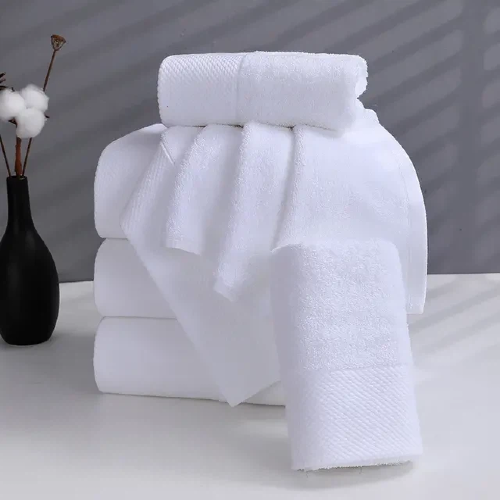
● Hotel towels often use long-staple cotton, which produces smoother yarn and fewer rough fiber ends.
● Combed and ring-spun yarns remove short fibers, creating a cleaner, softer, and more durable towel surface.
● Terry loops give Hotel Cotton Towels their plush texture while increasing the surface area available for absorbing water.
● Double-yarn construction can provide a thicker hand feel and better strength for repeated commercial washing.
● A suitable GSM creates comfort, but the heaviest towel is not always the best operational choice.
● Controlled bleaching and textile finishing help remove residues and prepare cotton fibers for softness and absorption.
● Correct detergent levels, thorough rinsing, and controlled tumble drying help hotel towels stay fluffy.
Hotel towels feel soft because several design and care choices work together. Cotton quality matters, but it is only the starting point. Yarn preparation, loop structure, fabric weight, finishing, and laundering all affect the final texture.
Cotton fibers vary in length and quality. Longer fibers can be spun into smoother and more even yarn. They need fewer joins, so fewer loose ends rise from the towel surface.
This smoother yarn feels gentler against the skin. It can also resist pilling better than yarn made mainly from short fibers.
However, cotton type alone does not guarantee quality. Fiber selection, spinning, weaving, and finishing must also be controlled.
Combing is a preparation process used before yarn production. It removes many short fibers, impurities, and uneven sections. The remaining fibers can form a smoother and more consistent yarn.
This process helps reduce surface roughness and loose lint. It can also improve yarn strength, which matters when towels face regular washing.
Most soft bath towels use a terry construction. Small cotton loops cover one or both sides of the fabric. These loops create the raised, cushioned surface guests feel after bathing.
Longer and fuller loops can increase softness because more cotton contacts the skin. They also provide more surface area for capturing moisture.
Loop design still requires balance. Very loose loops may snag easily, while extremely dense construction may slow drying. Cotton Incorporated notes that longer loops can increase softness and absorbency, while yarn structure affects strength and durability.
Some hotel towels use two-ply or double-yarn construction. Two yarn strands are combined to create stronger, fuller loops. The result can feel thicker and more substantial than a lightweight single-yarn towel.
GSM means grams per square meter. It describes the fabric’s weight rather than its exact quality.
A higher GSM towel usually contains more material. It may feel fuller, denser, and more luxurious. A lighter towel normally dries faster and places less demand on laundry equipment.
Hotels therefore select GSM according to positioning and operating needs. A luxury resort may prefer a heavier bath towel. A busy property may choose a medium-weight towel that balances softness, drying time, and replacement cost.
Towel Weight | Typical Feel | Operational Consideration |
Lightweight | Thin and quick drying | Lower laundry load but less plush |
Medium weight | Soft and balanced | Suitable for many hotel settings |
Heavyweight | Dense and luxurious | Longer drying time and higher laundry demand |
Hotels do not rely only on towel construction. Their laundry process also affects how the towels feel each day.
Washing removes body oils and residue. Thorough rinsing keeps detergent from remaining between the loops. Tumble drying then lifts the compressed pile and separates the fibers.
This movement creates the familiar fluffy hotel texture. Towels dried without enough movement may feel flatter or stiffer, even when the cotton quality is good.
Hotel Cotton Towels are selected for a demanding environment. They must feel comfortable while handling frequent use, regular washing, and repeated drying.
Cotton is widely used for bath towels because its natural fibers can create a soft, breathable surface. It does not need to feel slippery or heavily coated to provide comfort.
High-quality cotton also becomes flexible during proper washing. The loops open, the yarn relaxes, and the towel gains a fuller texture.
Guests do not judge softness through touch alone. A towel feels more comfortable when it quickly removes water without repeated rubbing.
Cotton loops draw moisture across a broad surface. A well-designed towel therefore feels both plush and effective.
A towel may feel smooth yet perform poorly if its fibers carry too much coating. True hotel comfort depends on a soft surface that remains open enough to absorb water.
A retail towel may look impressive before its first wash. A hotel towel must continue performing after many laundry cycles.
Hotels consider edge strength, loop stability, shrinkage, linting, drying time, and color retention. Reinforced hems and secure construction help prevent fraying, which can make the towel look worn and feel uneven.
The goal is not simply maximum softness. It is consistent softness throughout the towel’s practical service life.
These three qualities are closely connected, but they do not always increase together. A good towel specification balances them instead of maximizing one feature.
Some treatments coat fibers and make them feel smooth. The same coating may limit how easily water enters the cotton structure.
Hotels therefore need to distinguish temporary surface smoothness from useful softness. A quality towel should feel comfortable while still drying the skin efficiently.
Terry loops create more contact points between the towel and the body. This added surface supports both softness and water capture.
However, density must suit the yarn. Weak yarn in a dense construction may shed or break. Strong yarn in an overly tight weave may feel firm.
Material, yarn, loop height, and fabric weight should be evaluated as one system.
Frayed edges, pulled loops, and distorted hems can make a towel feel old before the cotton fibers are fully worn.
Double-stitched hems and reinforced edges help the towel keep its shape.
Even a well-made towel can become rough through incorrect washing. Laundry control is one major reason hotel towels often feel different from poorly maintained household towels.
Too much detergent can leave residue inside the pile. This residue makes loops feel coated, stiff, or heavy.
Detergent should match the load size, soil level, machine type, and water hardness. Adding more does not always improve cleaning.
Whirlpool also notes that excessive detergent can leave visible residue on washed items.
Cotton loops need to remain separate and flexible. Poor rinsing leaves detergent and mineral residue between them.
Hotels may adjust rinse settings when towels feel rough or lose absorbency. They may also review water hardness because minerals can build up during repeated washing.
A clean rinse allows the cotton pile to open during drying.
Tumble movement prevents wet loops from drying in a flat, compressed position. It separates the pile and restores volume.
Dryer airflow also matters. An overloaded machine restricts movement, causing uneven drying and flatter towels.
Hotels usually remove towels after they are fully dry. Storing damp towels compresses the pile and increases the risk of unwanted odors.
More heat does not always create better results. Very high temperatures and long cycles can place unnecessary stress on cotton fibers.
Overdrying may weaken the pile and create a dry, brittle feel. The correct setting dries the towel fully without repeatedly exposing it to excessive heat.
Some new towels do not feel as plush as expected. This does not always indicate poor material.
Towels are often stacked tightly for storage and shipping. Pressure flattens the terry pile and reduces its visible volume.
The first wash and tumble-dry cycle can help the loops rise again. Shaking the towel before drying also supports this process.
Unused towels may contain loose lint or small amounts of manufacturing residue. This can affect the first touch and initial absorbency.
Proper washing removes much of this material. The towel may become softer and more effective after several correct wash cycles.
Using too much detergent during the first wash may trap residue immediately. Heavy fabric softener can also coat the new loops.
Wash new towels separately, follow their care instructions, and avoid overloading the machine. These steps help the fibers open evenly.
You can recreate much of the hotel towel experience through better product selection and care.
Look beyond labels such as “luxury” or “premium.” Check the material, yarn type, weave, GSM, and edge construction.
Long-staple cotton, combed yarn, ring-spun yarn, and secure terry loops are useful quality signals. Hotel Cotton Towels should also have reinforced hems and consistent loop coverage.
Measure detergent instead of pouring it freely. Use enough for cleaning, but avoid leaving residue.
When towels already feel coated, an extra rinse may help. Persistent roughness may also require checking water hardness or washing machine performance.
Fabric softener can create an immediate smooth feeling. Repeated use may coat the towel surface and reduce its natural ability to absorb water.
Use it sparingly if the care label allows it. Proper rinsing and tumble movement often provide enough softness without heavy coating.
Shake wet towels before placing them in the dryer. This separates the loops and reduces tight folds.
Leave enough space for the towels to tumble. Remove them after complete drying, then fold them loosely for storage.
Hotels cannot select towels through touch alone. They need evidence that softness will remain under real operating conditions.
The specification should identify cotton content and yarn construction. Long-staple, combed, ring-spun, single-yarn, and double-yarn options can produce different results.
Buyers should also inspect loop consistency. Uneven loops may create weak areas and inconsistent texture.
A heavy towel may impress guests, but it also holds more water. It needs more drying time, storage space, and machine capacity.
Medium-weight towels may offer better balance for high-occupancy properties. The best GSM depends on the hotel category, guest expectations, and laundry system.
Request samples and run them through the planned laundry process. Compare the towels before and after repeated cycles.
Check softness, absorbency, drying time, shrinkage, lint, shape, seams, and color. A useful sample test should copy real operating conditions rather than gentle household care.
Hotel towels feel soft because material, construction, finishing, and laundry care work together. Long-staple cotton, combed yarn, terry loops, and balanced weight create a plush surface. Controlled washing and drying preserve that texture. Jie Ruiya supplies customizable Hotel Cotton Towels designed for comfort, absorption, repeated washing, and coordinated presentation. Its product range and services help properties meet guest expectations and daily operating needs.
A: Hotel towels often use better yarn, dense loops, controlled finishing, and professional laundering.
A: Use measured detergent, complete rinsing, moderate heat, and enough tumbling space.
A: Better cotton and construction may cost more, but longer service life can improve value.
A: Cotton usually offers a fuller natural feel, while microfiber is lighter and faster drying.
A: Detergent residue, mineral buildup, overloading, and excessive heat can stiffen the fibers.


