
Views: 0 Author: Site Editor Publish Time: 2026-06-15 Origin: Site


Traveling often means facing a tightly tucked fortress of multiple flat sheets. Sliding into a hotel bed can feel like breaking into a vault. You might wonder where you are supposed to sleep among all these crisp layers. We created this guide to clear up this very common confusion. It explains exactly how to navigate the traditional hospitality setup. It also provides a practical framework for home buyers. If you want to invest in authentic commercial-grade linens for your own bedroom, you need to know what to look for. We base our insights on standard housekeeping procedures and commercial laundering realities. You will learn the exact anatomy of a triple-sheeted bed. You will also discover how to recreate that distinct, cool sleeping environment without relying on misleading marketing claims.
The Core Rule: In a standard "triple-sheeted" hotel bed, you are meant to sleep between the bottom fitted (or flat) sheet and the second flat sheet.
The "Why": Hotels use multiple flat sheets primarily for operational efficiency, cost-control, and hygiene—not just luxury.
The Material Reality: Authentic hotel sheets rarely exceed a 300–400 thread count; durability and crispness (usually achieved via cotton percale) trump inflated thread counts.
Buying Criteria: Recreating the experience requires evaluating sheets based on weave structure, commercial-grade durability, and breathability rather than marketing hype.
Entering a freshly made hotel room reveals a pristine, flat sleeping surface. Housekeepers use a specific technique known as triple sheeting. This method layers multiple individual linens to create a hygienic envelope. You need to understand this anatomy to sleep comfortably. Let us break down the standard bedding layers you will encounter.
Layer 1: The Foundation. This is the very bottom layer covering the mattress protector. Housekeepers usually use a tightly tucked oversized flat sheet instead of a fitted sheet. It creates a smooth, drum-like surface.
Layer 2: The Middle Flat Sheet. They place this sheet directly over the foundation. It serves as the bottom half of the protective envelope.
Layer 3: The Blanket or Duvet Insert. This layer provides warmth. It sits right on top of the middle flat sheet.
Layer 4: The Top Flat Sheet. They place this final sheet over the blanket. They fold the edges of the middle sheet and top sheet together. This encases the blanket entirely.
You must follow a specific user protocol. You climb into the bed between Layer 1 and Layer 2. You should never touch the blanket or duvet directly. The middle flat sheet and top flat sheet act as a sanitary sandwich. They protect your skin from the heavier, harder-to-wash blanket.
Many travelers complain about heavily tucked hospital corners. These tight folds can trap your feet. They create friction and limit your nighttime mobility. We advise you to gently pull the bottom corners of the sheets out from under the mattress. You can loosen the foot area slightly while keeping the side tension intact. This provides adequate foot room without destroying the crisp feel of the bed.
You might think triple sheeting exists purely for your comfort. However, hotels design their bedding protocols around strict business logic. Hospitality managers face daily operational challenges. They need systems that guarantee cleanliness while remaining highly efficient. The triple sheeting system solves multiple problems at once.
Hygiene and compliance drive this setup. Flat sheets are incredibly easy to strip and wash. Housekeepers remove them after every single guest checks out. Bulky duvet covers present a different reality. They are notoriously difficult to remove. Changing a duvet cover takes significant time. Heavy duvet covers slow down room turnover rates. Triple sheeting acts as a reliable sanitary barrier. It guarantees you always touch freshly laundered cotton.
Operational scalability also favors flat sheets. Managing inventory for a large property is complex. Using uniform flat sheets reduces this complexity. Hotels do not have to match specific fitted sheets to specific mattresses. A king-sized flat sheet is versatile. Commercial laundry facilities also prefer flat sheets. They feed easily into large industrial ironers. They fold perfectly via automated machines. Fitted sheets with elastic corners tangle easily and slow down laundry operations.
We must also consider financial viability. Bedding takes heavy abuse in commercial environments. Replacing a stained flat sheet is cheap. Replacing a thick duvet cover costs significantly more. Fitted sheets lose their elastic stretch after repeated high-heat washing. Flat sheets simply last longer. They provide a better return on investment for hotel owners. This simple shift in bedding style saves properties thousands of dollars annually.
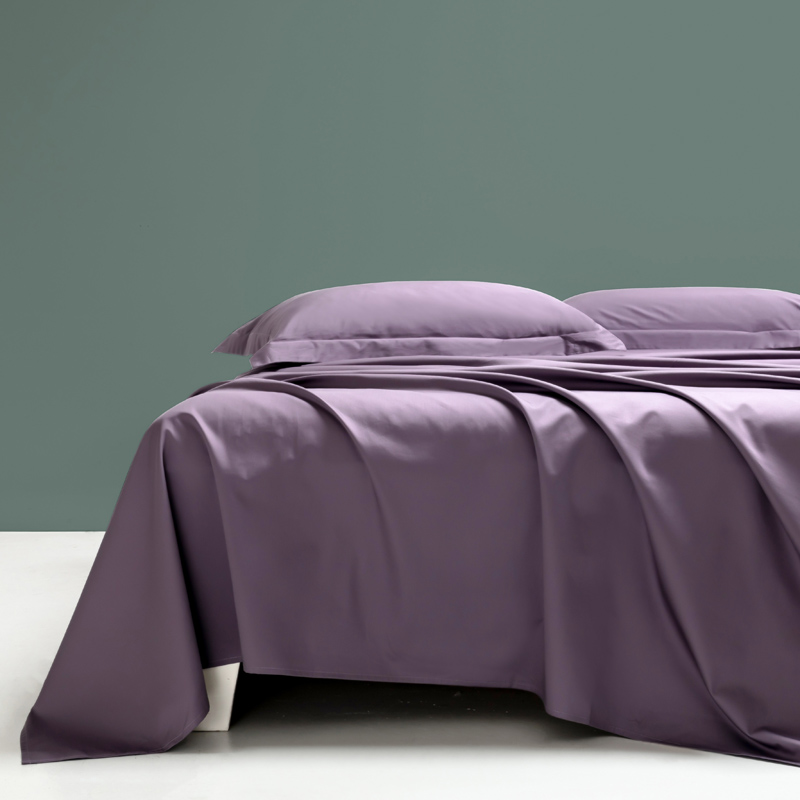
Many people return from vacations desperate to buy the linens they just slept on. Unfortunately, retailers often mislead these buyers. Marketers push astronomical thread counts as the ultimate sign of quality. You need a better framework for evaluating bedding.
First, we must debunk the thread count myth. You might assume luxury properties use 1000-thread-count linens. They do not. High thread counts trap heat and take too long to dry. The actual hospitality standard ranges between 250 and 400. This range balances softness with crucial airflow. It also ensures commercial-grade durability. If you want authentic Hotel Bed Sheets, look for a 300-thread-count construction. It provides the exact crispness you remember.
Understanding weaves is critical. The material selection matrix below outlines your main options.
Material & Weave | Characteristics | Best Used For |
|---|---|---|
Cotton Percale | Crisp, cool, matte finish. Offers a distinct "snap" when folded. Highly durable. | Hot sleepers and replicating the classic, crisp hospitality feel. |
Cotton Sateen | Smooth, silky drape, slight sheen. Retains more body heat. | Ultra-luxury properties in cooler climates. Smooth skin feel. |
Poly-Cotton Blends | Wrinkle-resistant, fast-drying, highly durable. Poor breathability. | Mid-tier properties focused on fast laundry turnaround. Avoid for home use. |
Cotton percale remains the absolute industry standard. It gives you that cool-to-the-touch sensation. Cotton sateen offers a silkier alternative. It drapes beautifully but wears out slightly faster under heavy washing. Mid-tier motels often use poly-cotton blends. These blends resist wrinkles perfectly. However, they sleep incredibly hot. We strongly advise consumers to avoid synthetic blends for their own homes. True comfort requires natural, breathable fibers.
Sizing and shrinkage represent another common trap. True commercial flat sheets are deliberately oversized. They must accommodate deep tucking under thick mattresses. Standard retail sizing often falls short. Always check the exact dimension specifications when purchasing. Ensure the flat sheet has enough extra length to fold properly around your mattress corners. Do not just rely on standard "Queen" or "King" labels.
Buying the right linens is only half the battle. Recreating the authentic experience requires proper implementation. You must learn how to make your bed the hotel way. It takes practice, but the results are worth it.
Start with the base layer. Ditch your fitted sheet. Use a large flat sheet instead. Lay it over your mattress. Pull it incredibly taut. This creates a tight, drum-like surface. It removes the wrinkles that fitted sheets often leave behind. Next, you need to master the hospital corner. This folding technique locks your linens in place.
Tuck the end of the sheet squarely under the foot of the mattress.
Grab the draping side edge of the sheet. Lift it straight up and fold it onto the top of the bed.
Tuck the remaining hanging fabric at the corner tightly under the mattress.
Drop the top piece of fabric down. Tuck it smoothly under the side of the bed.
You must also accept certain maintenance realities. Achieving a perfectly smooth surface is difficult at home. Hotels use massive industrial rotary ironers. These machines press flat sheets while they are still slightly damp. They eliminate every single wrinkle in seconds. You likely do not have a rotary ironer in your laundry room.
We recommend the water bottle trick as a practical at-home alternative. Make your bed completely. Fill a spray bottle with clean tap water. Lightly mist the surface of the made bed. Grab the edges of the sheets and pull the fabric taut. The water relaxes the cotton fibers. As the fabric dries, it tightens further. This simulates an ironed finish without the effort of dragging out an ironing board.
Travelers often worry about the cleanliness of commercial beds. You hear horror stories about unwashed linens. However, standard operating procedures generally ensure a highly sanitary environment. Understanding industrial laundering standards will give you peace of mind.
Commercial laundry facilities do not operate like your home washing machine. They use extreme processes. They wash linens at very high heat. They inject harsh chemical sanitizers and professional-grade bleaches into the wash cycles. The industrial pressing process applies massive heat and pressure. This combination guarantees that standard linens emerge practically sterile. Pathogens cannot survive this process.
You should still perform a brief inspection upon check-in. It is a smart habit for any traveler. We recommend checking specific areas.
Pull back the top layers. Inspect the middle flat sheets for stray hairs or visible stains.
Examine the mattress seams and the edge of the mattress protector. Look for small dark spots that might indicate bedbugs.
Smell the linens. They should have a faint, clean chemical bleach odor. Heavy, sweet masking fragrances often indicate improperly cleaned fabrics.
Sometimes, housekeepers make mistakes. You might find a stained or torn sheet. You must know when to ask for a change. Do not be unreasonable, but do not settle for dirty linens. If you find multiple hairs, noticeable discoloration, or strong odors, call the front desk immediately. Request a fresh set of linens or a room change. They handle these requests daily. A reputable property will fix the issue without arguing.
Understand the layers: Sleeping comfortably in a hotel bed requires knowing you belong between the tightly tucked foundation and the middle flat sheet.
Ignore marketing hype: Bringing this experience home means ignoring astronomical thread counts. Focus on 300-400 count cotton percale weaves for that authentic crispness.
Master the technique: Proper bed-making, including utilizing oversized flat sheets and hospital corners, is essential to recreate the tight, drum-like feel.
Embrace practical maintenance: Use the water spray trick to achieve a smooth look without industrial ironing equipment.
Next Steps: Evaluate your current linen closet. Check the tags on your bedding. If they are poly-blends or excessively high thread counts, consider upgrading to commercial-grade percale flat sheets for your base layers. Look for curated shortlists of vetted hospitality suppliers to purchase your next set.
A: White sheets prove cleanliness instantly. They hide no stains, giving guests immediate peace of mind. Practically, white linens are much easier to bleach in commercial laundries. They also provide aesthetic uniformity, allowing housekeepers to mix and match inventory without worrying about dye lots or fading patterns.
A: Mostly, they just wash the flat sheets. Duvet inserts are bulky and time-consuming to launder. This is exactly why the triple-sheeting method is standard. The middle and top flat sheets completely encase the duvet, acting as a sanitary, easily washable barrier between the sleeper and the blanket.
A: Heavy hospital corner tucking is designed to keep the bed looking pristine and tightly pulled for your arrival. To fix this, gently pull the linens at the very bottom corners of the mattress. This safely untucks the foot area, giving you mobility while maintaining the bed's structure.
A: Percale features a simple one-over-one weave, resulting in a crisp, cool, and highly breathable fabric. It is the traditional standard. Sateen uses a different weave structure, creating a smoother, silkier drape that feels warmer. Most guests prefer percale for its classic "snap" and cool touch.


