
Views: 0 Author: Site Editor Publish Time: 2026-06-17 Origin: Site


Traditional duvet covers are notoriously difficult to launder. Housekeeping teams find them incredibly time-consuming to change during daily turnovers. Guests also frequently complain these heavy covers trap excess body heat. High-end hospitality properties solve this friction by relying on highly specific layering techniques. Primarily, they utilize "triple sheeting." This method perfectly balances strict hygiene standards with a premium, luxury sleep experience. Washing flat layers is fundamentally easier than wrestling bulky fabric envelopes.
Whether you are optimizing turnaround times for a boutique property or replicating a five-star aesthetic at home, success requires the right foundation. Mastering how to use Hotel Bed Sheets demands high-quality materials and a standardized operational process. You must understand the specific architecture behind luxury bedding. Read on to discover exactly how professionals construct the perfect bed and how you can implement this system flawlessly.
Triple sheeting replaces the standard duvet cover with three flat hotel bed sheets and a lightweight blanket, drastically reducing laundering time and costs.
The effectiveness of hotel layering depends entirely on sheet construction; crisp, durable cotton percale is the industry standard for this method.
Implementing hotel-style bedding requires specific folding and tucking techniques (the "hospital corner") to prevent shifting during the night.
Transitioning to flat-sheet layering requires evaluating commercial-grade textiles for shrinkage tolerance, weight, and breathability.
Duvet covers introduce significant operational drag. Housekeeping minutes per room increase dramatically when staff wrestle bulky inserts into tight enclosures. These covers also degrade much faster due to complex washing requirements. Zippers break easily. Buttons fall off in commercial machines. Seams tear under heavy industrial stress. You lose valuable time and inventory when relying on traditional covers.
Hygiene and turnaround efficiency drive the hospitality industry. Washing flat sheets is fundamentally faster than processing heavy covers. It is also significantly more energy-efficient. Laundry facilities can fit more flat sheets into a single machine cycle. They dry faster and press perfectly flat. This efficiency allows properties to wash the entire sleep surface easily between guests. Homeowners can enjoy this exact same convenience. You no longer need to skip washing the top layer just because it is difficult to remove.
The cost-to-outcome ratio strongly favors triple sheeting. Flat sheets are much less expensive to replace than specialized, heavy duvet covers. If a guest stains a flat sheet, replacing it costs only a fraction of replacing an entire decorative cover. Triple sheeting creates a clean, bright, and uniform aesthetic. You do not need top-tier decorative layers to achieve a high-end look. The crisp white layers signal verifiable cleanliness to anyone entering the room. This visual assurance builds immediate trust.
To master this bedding system, you must understand the exact architecture. Professionals divide the sleep surface into four distinct, functional layers. Each layer serves a specific purpose in temperature regulation and hygiene.
This is the foundational layer. You pull it completely taut over the mattress protector. Consumers typically prefer fitted sheets with elastic borders. However, in commercial hospitality, oversized flat sheets are often used here instead. Elastic degrades quickly under high heat. Flat sheets simplify inventory management. Staff do not need to sort fitted versus flat items. They simply grab an oversized flat sheet and lock it down using tight corners.
You place this sheet over the base layer, seam-side up. Placing it seam-side up ensures the smooth side touches the sleeper's skin. This layer acts as the primary hygiene barrier between the sleeper and the thermal layer. It absorbs body oils and moisture throughout the night. It must be breathable to prevent the sleeper from overheating.
This is your primary insulation layer. Properties typically use a lightweight fleece, down, or down-alternative blanket. You do not pull this layer all the way to the top of the bed. Instead, you position it exactly six inches below the top edge of the middle sheet. Leaving this gap is crucial for the encapsulation step.
You place this final sheet directly over the blanket, seam-side down. Once again, the smooth side faces outward. You then fold the exposed top edge of the middle sheet together with this top sheet. They fold over the top edge of the blanket. This encapsulates the thermal layer completely. The blanket never touches the sleeper's skin.
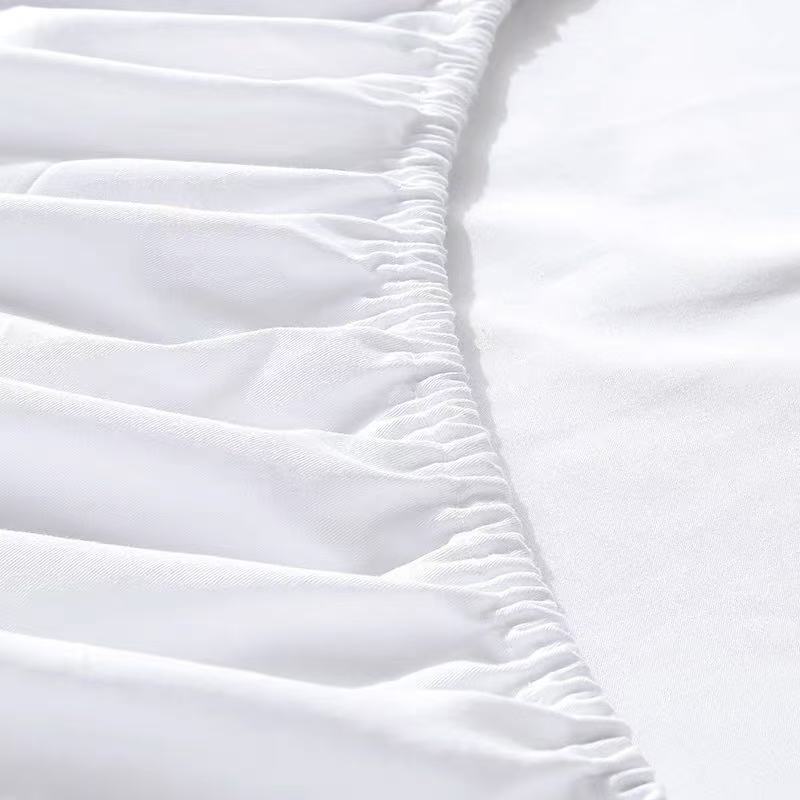
The effectiveness of this system relies entirely on your textile choices. Selecting the wrong fabric causes the layers to slip apart overnight. You must evaluate options based on structural integrity, breathability, and ease of maintenance.
Percale utilizes a strict one-over, one-under weave structure. This classic weave remains the undisputed industry standard. It provides the necessary structural "crispness" required for tight tucking. Percale also breathes exceptionally well, allowing body heat to escape. Sateen uses a different weave. It floats multiple yarns over a single yarn. This creates a silky texture but sleeps much warmer. Sateen also degrades faster and snags easily under heavy commercial laundering.
Here is a quick comparison table to illustrate the differences:
Fabric Characteristic | Cotton Percale | Cotton Sateen |
|---|---|---|
Weave Structure | One-over, one-under | Multi-over, one-under |
Texture | Crisp, cool, matte finish | Silky, smooth, subtle sheen |
Breathability | Excellent (Maximum airflow) | Moderate (Traps more heat) |
Tucking Integrity | High (Holds folds well) | Low (Prone to slipping) |
You must dismiss the high-thread-count myth. Marketers often push 800 or 1000 thread count options as premium luxury. The optimal range for durability and airflow is actually 200–300. Anything higher often relies on multi-ply threads. Manufacturers twist thin, weak fibers together to inflate the count. These multi-ply threads trap heat aggressively. They also pill after only a few wash cycles. A crisp 300 thread count, single-ply sheet outperforms an 800 thread count multi-ply sheet every time.
You must also decide between 100% pure cotton and poly-blends. Pure long-staple cotton offers the absolute best guest experience. It is softer and breathes perfectly. However, pure cotton requires extensive ironing to look presentable. Cotton-poly blends (often a 60/40 ratio) offer vital operational scalability. Polyester fibers resist wrinkling naturally. They also reduce drying time significantly in commercial machines. While they sacrifice a small amount of breathability, blends keep laundry operations moving fast.
Summary Chart: Ideal Textile Configuration | ||
Layer Name | Recommended Material | Primary Purpose |
|---|---|---|
The Base | Percale or Poly-Blend | Foundation & Protection |
Middle Layer | 100% Cotton Percale | Skin Barrier & Comfort |
Thermal Layer | Down-Alternative | Weightless Warmth |
Top Layer | Percale or Poly-Blend | Visual Presentation |
Theory only goes so far. You must execute the physical process correctly. Implementing hotel-style bedding requires specific folding and tucking techniques. The "hospital corner" is mandatory. It prevents layers from shifting during the night. Follow these steps meticulously.
First, center the bottom sheet over the bare mattress. Ensure an equal amount of fabric hangs off all four sides. Tuck the fabric deeply under the head and foot of the bed. Now, secure the sides using tight hospital corners. To do this, grab the side drape and pull it straight up. Tuck the remaining lower hanging fabric under the mattress. Then, drop the piece you are holding. It will form a neat 45-degree angle. Tuck that firmly under the mattress.
Next, drape the middle sheet over the bed. Ensure the smooth side faces up. Pull the top hem all the way until it touches the headboard. Let the sides drape naturally for now. Add your thermal blanket. Do not pull the blanket to the headboard. Stop roughly six inches short of the top edge. Ensure the blanket hangs evenly on the left and right sides.
Place your final top sheet directly over the blanket. Ensure the smooth side faces down. Align the top edge of this sheet perfectly with the top edge of the middle sheet. You now have six inches of both sheets exposed above the blanket. Fold these exposed sheets down firmly over the blanket. This action seals the thermal layer inside completely. Smooth the fold with your hands to remove any trapped air pockets.
You must now anchor the entire assembly. Move to the foot of the bed. Tuck all the encapsulated layers tightly under the mattress at once. Create a sharp hospital corner at the bottom left and bottom right corners. This locks the layers together. You can leave the sides draped loosely or tuck them tightly. Leaving them draped creates a softer look. Tucking them tightly creates an ultra-modern, crisp aesthetic.
Every operational change introduces new challenges. Transitioning to this system is not foolproof. You must prepare for specific maintenance realities to ensure success.
Material Behavior: 100% cotton Hotel Bed Sheets will wrinkle heavily after washing. This is unavoidable.
Commercial Solutions: Achieving the "glass-like" hotel finish requires large commercial flatwork ironers. These machines press textiles perfectly flat under high heat.
Home Solutions: If you lack commercial equipment, use a damp-ironing process. Spray the bed surface lightly with water after making it. Run a warm iron directly over the tightened surface to remove creases.
Slippage: Inexperienced layering often leads to the sheets untucking overnight. Guests move in their sleep and kick the layers loose.
Dimension Math: Success requires purchasing oversized textiles. Standard retail sizing rarely works. You need adequate drop length.
The 15-Inch Rule: Ensure at least 15 inches of overhang on all sides. Deep modern mattresses demand extremely wide flat sheets to ensure deep anchoring.
Skill Acquisition: For hospitality operators, transitioning to triple sheeting requires an initial investment in training. Housekeepers cannot learn this instantly.
Muscle Memory: The folding and locking steps must become muscle memory. Supervise new staff closely during the first week of implementation.
Time Metrics: Track turnover times. Once staff master the hospital corner, making a triple-sheeted bed actually takes less time than stuffing a traditional duvet.
Ditching the traditional duvet for a flat sheet system requires intelligent purchasing logic. You must acquire durable, mid-thread-count percale textiles. They must feature sufficient dimensions for deep tucking under modern mattresses. Anything less will result in layers slipping apart overnight.
Audit your current laundering bottlenecks immediately. Note how much time your staff spends fighting with heavy covers. If efficiency and verifiable cleanliness are priorities, take action today. Transition one test bed to the triple-sheet method. Use high-quality commercial-grade flat sheets. Evaluate the visual outcome and track the laundering time saved. Once you verify the operational benefits, roll this luxury standard out to every room.
A: No. While consumers prefer fitted sheets, hotels traditionally use oversized flat sheets for the base. This simplifies inventory management. It also ensures a tighter, more secure fit across varying mattress depths without relying on elastic bands that degrade.
A: It depends entirely on the thermal layer chosen. The blanket provides the insulation. The layers themselves regulate temperature better than a thick cover, allowing for highly customizable warmth without trapping excess moisture.
A: The integrity of the layers relies on two factors. First, the top fold encapsulating the blanket creates friction. Second, the tension of the hospital corners at the foot of the bed locks everything down. Proper sizing is critical.


