


Did you recently experience the best sleep of your life at a luxury property? Many travelers try to bring that magic home. They often face a confusing retail market. Shoppers feel overwhelmed by consumer brands claiming to offer genuine luxury. Many of these products are simply standard bedding masked behind clever marketing.
The retail bedding market bursts with deceptive "hotel style" claims. Authentic hospitality bedding requires highly specific constructions. Procurement teams demand strict commercial-grade fill ratios. They also require high durability standards. You rarely find these specifications in standard big-box retail stores.
We will decode the exact specifications used by top-tier hospitality procurement teams. You will learn the sourcing logic behind premium sleep experiences. We cover everything from dual-chamber designs to proper fill materials. This guide sets the expectation for what genuine hospitality bedding actually entails. By the end, you will know exactly how to identify and purchase real Hotel Pillows.
Authentic hotel pillows prioritize commercial durability and universal comfort, typically utilizing a "pillow-in-pillow" (chamber) construction.
Luxury chains predominantly use specific ratios of responsibly sourced down/feather blends or high-grade gel microfiber (down alternative) to accommodate hypoallergenic needs.
True hospitality pillows are designed for high-temperature commercial laundering; retail knockoffs often degrade quickly under similar maintenance.
Purchasing direct from hotel boutiques or certified commercial suppliers (B2B2C) is the most reliable way to avoid counterfeit "hotel-style" products.
Major luxury chains rarely use a single-fill design. They rely on a dual-core construction. Industry experts call this a chamber design or pillow-in-pillow. This architecture features a supportive inner core. Manufacturers typically fill this core using resilient waterfowl feathers. They surround this firm center using a plush outer layer. This outer layer usually contains soft, high-loft down.
This design creates a perfect balance. You get structural support from the inner feathers. Your neck stays perfectly aligned. Meanwhile, the outer down layer provides a luxurious sinking sensation. Your head feels cradled without bottoming out against the mattress.
Authentic Hotel Pillows require incredibly durable exterior fabrics. Procurement buyers insist on cambric cotton shells. The thread count usually hovers between 230 and 300. Ultra-high thread counts are mostly a retail marketing myth.
Hospitality focuses on practical performance. Tightly woven fabrics are crucial. They keep sharp feathers from poking through the shell. The fabric must also remain highly breathable. A 1000-thread-count shell blocks airflow. It traps body heat and disrupts sleep. Cambric cotton hits the sweet spot. It offers extreme durability, breathability, and down-proof performance.
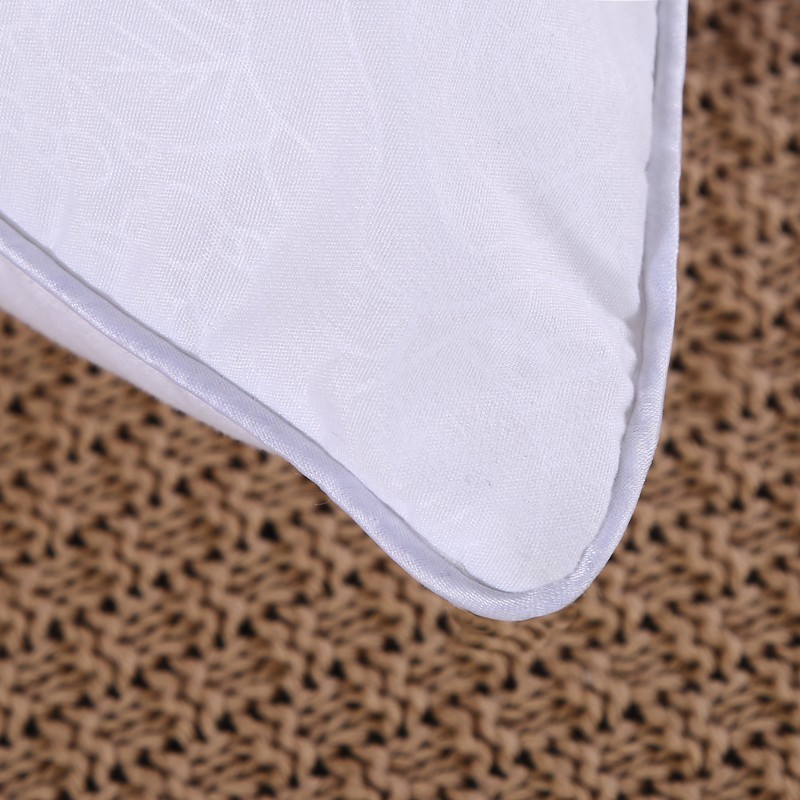
Edge construction directly impacts loft retention. A knife-edge finish involves sewing two pieces of fabric flat together. This creates a simple, tapering border. It works beautifully for stomach and back sleepers. It allows the filling to compress comfortably under the neck.
Gusseted finishes add a distinct side panel. This panel creates a three-dimensional box shape. It provides extra space for the filling to expand. Side sleepers benefit greatly from gussets. The elevated edges offer superior gap support between the neck and shoulder.
Luxury properties rarely use 100% down. Pure down lacks structural support for long-term use. Instead, hotels use specific feather and down blends. Standard hospitality ratios often sit at 50/50 or 75/25. The first number represents the feather percentage.
Feathers provide necessary weight. They create the sturdy foundation of the pillow. Down provides the temperature-regulating loft. It traps air efficiently. This blend ensures the product remains breathable while retaining its shape. Guests experience deep comfort without excessive heat buildup.
Synthetic options are absolute necessities for hospitality compliance. Hotels must accommodate guests requiring hypoallergenic environments. Commercial buyers do not use cheap polyester batting. Standard retail synthetics clump and flatten quickly.
Hospitality-grade products use premium spun gel fibers. These microfibers mimic the cluster structure of natural down. They glide against each other smoothly. This creates a fluffy, moldable texture. High-grade gel alternatives withstand brutal commercial laundering. They maintain their loft far longer than standard consumer synthetics.
You rarely see memory foam as a default option in luxury resorts. Solid memory foam presents distinct challenges. It traps body heat aggressively. This heat retention causes severe discomfort for many sleepers.
Memory foam also fails commercial laundering constraints. You cannot put solid foam into industrial washing machines. Hotels need bedding they can sanitize rapidly at high temperatures. Guest preferences regarding memory foam are highly polarizing. Many people hate the dense, unresponsive feeling. Hotels prefer universally accepted, moldable chamber designs instead.
You must evaluate density based on your primary sleep posture. Buying a random firmness level guarantees neck pain. Follow this functional framework for evaluation:
Soft/Plush: Ideal for stomach sleepers. A flat profile prevents dangerous upward neck strain.
Medium: The hotel standard default. It caters perfectly to back sleepers. It supports the natural cervical curve.
Firm: Mandatory for side sleepers. It fills the sizable gap between the neck and the mattress.
Shoppers often confuse fill power and fill weight. We need to demystify these metrics. Fill power measures insulation and fluffiness. A higher fill power means the down clusters are larger. They trap more air. However, a higher fill power does not equal a firmer pillow.
You must check the actual fill weight. Fill weight indicates the exact ounces of material stuffed inside the shell. A high fill power with a low fill weight feels incredibly soft and collapses easily. For substantial support, you need an adequate fill weight combined with good fill power.
Metric | What It Measures | Impact on Your Sleep Experience |
|---|---|---|
Fill Power | Volume and cluster size of the down. | Determines overall fluffiness, breathability, and lifespan. |
Fill Weight | Total ounces of material inside the shell. | Determines the actual firmness and physical support level. |
You should always verify authenticity through industry-standard labels. Counterfeit brands cut corners on chemical processing and ethical sourcing. Look for specific certifications before purchasing Hotel Pillows.
Seek out the OEKO-TEX Standard 100 label. This certification guarantees the product remains entirely chemical-free. It proves the manufacturer used safe dyes and finishing treatments. Additionally, check for the RDS certification. The Responsible Down Standard ensures ethical animal treatment. It verifies the down comes from safe, traceable supply chains.
You need to set realistic expectations for daily use. High-end bedding requires active maintenance. Real down products compress under heavy body weight. High-grade alternative fills also flatten slightly over an eight-hour sleep cycle.
Hotel housekeepers perform aggressive fluffing every single morning. They push the sides inward rapidly. This forces air back into the filling clusters. You must replicate this aggressive fluffing at home. It maintains their shape. It also preserves their long-term structural integrity.
Washing authentic hospitality bedding at home carries distinct risks. Industrial machines use massive front-loading drums. Home washing machines often rely on top-loading designs with central agitators. These agitators destroy chamber-style constructions. They tear internal seams and ruin the fill distribution.
Always use a front-loading machine. Wash on a gentle cycle using mild liquid detergent. Dry them thoroughly on low heat. Add three clean tennis balls into the dryer drum. The balls bounce around and break up damp clusters. This prevents mildew and restores ultimate fluffiness.
We must be totally transparent about longevity. Commercial bedding boasts exceptional durability. However, the exact "hotel feel" does not last forever under constant use. Hotels rotate their inventory regularly to ensure peak performance.
For home environments, expect optimal performance for about 24 to 36 months. Nightly residential use slowly breaks down natural and synthetic fibers. The return on investment remains high due to improved sleep quality. Replacing them every two to three years ensures proper spinal alignment.
Buying directly from luxury brand boutiques is a popular option. This route offers distinct pros and cons. On the positive side, you get guaranteed authenticity. You receive the exact match to the bedding you loved during your stay.
The primary drawback is the premium markup. Hotels rebrand products from commercial manufacturers. They add significant retail margins to the final price. You pay extra for the official resort logo on the tag.
Savvy buyers bypass the hotel boutiques entirely. They identify the actual B2B manufacturers. Many commercial suppliers operate direct-to-consumer storefronts. Brands like Pacific Coast Feather and Downlite supply thousands of luxury properties globally.
You can purchase identical commercial-grade models from these manufacturers. This strategy saves considerable money. You skip the luxury markup while securing the exact chamber designs and fill ratios used by premium resorts.
The retail market relies heavily on confusing terminology. You need a reliable checklist to spot fake claims. Beware of products lacking commercial specifications. Watch out for these common red flags:
Suspiciously Low Prices: Genuine down and commercial-grade gel fibers are expensive to produce. Extreme discounts indicate cheap synthetic batting.
Lack of Ratio Disclosures: Authentic brands proudly list their exact feather-to-down ratios. Impostors use vague terms like "blended fill."
Thread Count Marketing: Avoid packaging that screams "1000 Thread Count." True commercial shells rely on breathable 230-300 TC cambric cotton.
Vague Hypoallergenic Claims: Look for actual OEKO-TEX certifications instead of generic "allergy-friendly" marketing copy.
You can easily bypass these impostors. Focus strictly on structural facts rather than flashy retail packaging. This discipline protects your wallet and guarantees better rest.
Finding genuine hospitality bedding requires cutting through retail marketing noise. Prioritize the proven dual-core chamber construction. Verify the precise down-to-feather ratio. If you need synthetic options, demand high-grade spun gel fibers.
Always bypass cheap retail knockoffs. Buy directly from authorized hospitality suppliers or official resort boutiques. Audit your primary sleep position right now. Determine your ideal density level. Shortlist two to three authentic suppliers. Make an informed purchase to finally capture that perfect five-star sleep experience at home.
A: Hotels use this strategy to accommodate diverse guest preferences. They typically provide varying firmness levels. You will usually find two soft down options and two firmer down-alternative options. This ensures every guest finds their ideal neck support regardless of their preferred sleep position.
A: Yes. Commercial properties follow rigorous, high-temperature washing protocols that eradicate dust mites and allergens. Furthermore, reputable hotels always stock high-quality, hypoallergenic down alternatives. These synthetic gel fibers provide luxury comfort without triggering natural down sensitivities.
A: Several variables impact your perception. Hotel mattress firmness heavily influences how your neck aligns with the bedding. Housekeeping also uses industrial presses on pillowcases, creating a crisp, tight structure. Finally, the relaxing psychological impact of a vacation environment naturally enhances your overall sleep experience.


