
Views: 0 Author: Site Editor Publish Time: 2026-06-11 Origin: Site


Have you ever woken up in a five-star suite and wondered how the bed feels so incredibly perfect? Travelers constantly try to replicate this specific luxury sleep experience at home. Hospitality businesses also face the intense challenge of procuring durable, high-satisfaction bedding. Marketing labels like "hotel quality" flood the retail market, but they remain largely unregulated and misleading. True commercial comfort does not happen by accident. It relies on specific fill materials, precise fill weights, and advanced structural engineering, such as dual-chamber designs.
This guide strips away the marketing fluff to show you exactly what goes into these elusive sleep products. We will examine the exact materials, precise ratios, and rigorous commercial standards used in genuine hospitality bedding. You will learn how to identify authentic constructions and make evidence-based purchasing decisions for your bedroom or your property.
The Big Three: Standard hotel pillows are predominantly filled with Goose/Duck Down, Feather blends, or advanced Down Alternatives (polyester microfibers).
The "Secret" Construction: Luxury hotels frequently use a "pillow-in-a-pillow" (dual-chamber) design, combining a supportive feather core with a soft down outer layer.
Allergy Compliance: Down alternative fills are the commercial standard for standard room setups to minimize allergy liabilities, with natural down often reserved for VIPs or "pillow menus."
Durability Over Fluff: Commercial hotel pillows are selected based on their ability to withstand aggressive laundering cycles without losing structural integrity or loft.
We often see consumer brands market pure down as the ultimate sleep luxury. Commercial hospitality experts know a different reality. Pure down lacks internal structural integrity. It flattens out rapidly under the weight of a human head. Standard luxury blends use a highly calculated ratio instead. They typically feature 75% feather and 25% down. Feathers provide a strong inner framework. They possess rigid quills that maintain volume. Down clusters offer immediate surface softness. This specific combination yields ideal support and exceptional comfort.
Commercial buyers also track a critical metric called Fill Power. Fill power measures the amount of space one ounce of down occupies. Commercial fill power standards usually start at 600 and go upward. Higher fill power means the down clusters trap more air. They deliver superior loft. They also bounce back instantly after you lift your head. High fill power dictates both the immediate plushness and the long-term resilience of standard Hotel Pillows.
We rely heavily on advanced microfibers in modern hospitality. Manufacturers use specialized gel-infused polyester. They also utilize highly engineered siliconized microfibers. These synthetic fibers mimic the three-dimensional cluster structure of natural down. They slide past each other smoothly. They behave remarkably like natural down under physical pressure.
Properties make this alternative the default fill for several practical reasons. Hypoallergenic compliance drives this major operational decision. Allergy liabilities represent a significant concern for global hospitality brands. Down alternative fibers completely eliminate natural dander. They also survive harsh commercial laundering processes easily. They do not require the delicate handling associated with natural plumage.
Solid or shredded memory foam rarely serves as a default option on a standard luxury bed. Foam retains body heat aggressively. It creates a warm sleep environment. Sleepers also have highly polarizing preferences regarding foam firmness. You will find foam fills strictly on by-request pillow menus. Latex offers better breathability than traditional memory foam. However, its heavy weight and distinct bounce make it a niche application. Housekeeping staff keep these specialized options in reserve for specific guest requests.
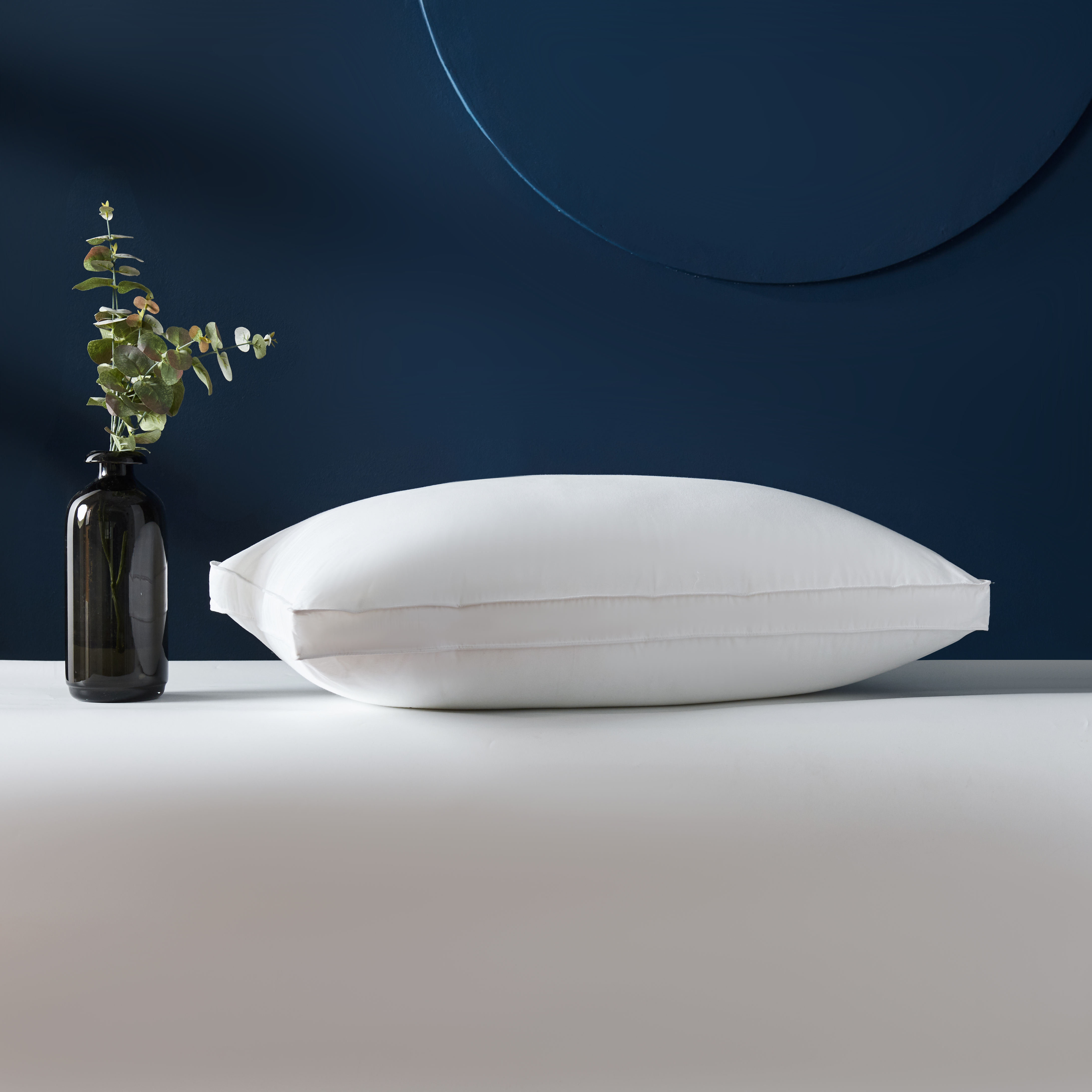
Guests frequently complain about standard retail bedding. They state items are either "too flat" or "too hard." The hospitality industry solves this universal dilemma through specialized engineering. The dual-chamber architecture fundamentally changes how bedding supports the human neck.
We call this the pillow-in-a-pillow design. It relies on two distinct structural zones. The inner chamber holds coarse, tightly packed feathers. This core delivers massive structural volume. It pushes up against the cervical spine to maintain alignment. The outer chamber surrounds this firm core entirely. It holds pure, high-loft down or ultra-fine microfiber. This outer layer provides a plush, highly tactile surface feel. You get the strict support of a firm core alongside the immediate softness of a cloud.
This architecture provides massive commercial advantages for property operators:
Prevents Fill Migration: The inner core stops fibers from shifting entirely to one side during the night.
Reduces Housekeeping Labor: The rigid core requires significantly less manual fluffing to look presentable.
Maintains Uniform Appearance: The structural tension keeps the bed looking pristine and perfectly shaped for incoming guests.
Enhances Sleep Quality: It accommodates combination sleepers who shift between side and back positions frequently.
Hospitality procurement involves rigorous technical evaluation. Commercial buyers test products against intense physical demands. They focus strictly on material endurance and guest safety.
Commercial laundries utilize massive industrial extractors. These machines spin at extreme velocities to remove water. They subject textiles to massive centrifugal force. High-heat commercial dryers follow this extraction process. Natural fills handle this brutal environment remarkably well. High-grade down regains its loft beautifully after aggressive tumbling. Down alternatives face greater challenges here. Synthetic fibers tend to clump or melt slightly over time under high commercial heat. They lose their smooth glide and eventually form dense, uncomfortable lumps.
Guest safety dictates strict chemical and ethical compliance. Procurement teams mandate recognized global certifications. The OEKO-TEX Standard 100 guarantees chemical safety. It ensures the textile contains no harmful substances or toxic dyes. The Responsible Down Standard (RDS) provides strict ethical sourcing verification. It ensures suppliers treat waterfowl humanely. These certifications establish absolute trust. They protect properties from liability and ensure safe guest experiences.
Commercial durability relies on strict replacement schedules. Different fills physically break down at different rates. Synthetics degrade faster due to friction and high-heat washing. Hospitality operators typically replace down alternative units every 12 to 18 months. Natural down possesses superior structural resilience. A high-quality feather and down blend lasts between 24 and 36 months under standard commercial usage. Proper laundering techniques heavily influence these survival rates.
Sleep temperature directly impacts guest satisfaction scores. Natural down excels at thermal regulation. The natural clusters expand to trap air or compress to release heat. Gel-infused microfibers also perform well. They wick moisture away from the skin effectively. Standard dense memory foam traps heat against the sleeper. This creates a highly uncomfortable microclimate. Properties avoid standard foam to prevent nighttime overheating.
Comparison of Commercial Fill Materials | ||||
Material Type | Washability & Recovery | Replacement Cycle | Thermal Regulation | Primary Use Case |
|---|---|---|---|---|
Feather/Down Blends | Excellent loft recovery; withstands high heat | 24 to 36 months | Highly breathable; adapts to body heat | Luxury suites & VIP rooms |
Advanced Microfiber | Prone to clumping over multiple high-heat cycles | 12 to 18 months | Good breathability; gel variants sleep cool | Standard property-wide deployment |
Memory Foam | Difficult to wash; requires spot cleaning only | 36+ months (varies by use) | Retains body heat significantly | On-request pillow menus only |
The retail market relies heavily on vague buzzwords. Brands know consumers desire genuine hospitality experiences. They exploit this desire using misleading terminology. You must navigate several significant risks to secure authentic commercial bedding.
Watch out for the "hotel-style" label trap. Direct-to-consumer brands frequently use "hotel-style" as a generic marketing term. They use this phrase without disclosing exact fill percentages. They hide the denier metrics of their synthetic fibers. A true commercial product always provides a detailed law label. This tag explicitly lists the exact ratio of feather to down. It lists the precise fiber composition. Ignore the front packaging. Read the attached law label exclusively.
Home laundering presents another massive risk. You can easily destroy authentic Hotel Pillows in standard residential washing machines. Natural down requires specific mechanical agitation. It requires prolonged, consistent heat to dry completely. A damp inner core breeds mildew rapidly. It creates foul odors and ruins the internal support structure. You must use high-capacity machines and dryer balls to maintain structural integrity.
Chemical off-gassing causes frequent complaints. Low-grade synthetic fills emit strong chemical odors upon opening. Polyurethane foam requires a mandatory break-in period. You must air out foam-based alternatives in a well-ventilated room for up to 72 hours. Failure to do so exposes sleepers to volatile organic compounds (VOCs). Genuine hospitality operators never expose guests to fresh, off-gassing foam.
To summarize, avoid these common implementation mistakes:
Purchasing based purely on marketing text rather than the physical law label.
Assuming pure 100% down provides the best structural neck support.
Washing natural fill products without ensuring they dry completely to the absolute core.
Deploying brand-new foam options without executing a proper 72-hour off-gassing period.
Ignoring OEKO-TEX or RDS certifications when evaluating material safety.
Selecting the optimal material requires a strategic approach. Your final choice depends entirely on your specific end-use scenario. Consumers outfitting a home bedroom have different priorities than a director of housekeeping.
Individual sleepers must prioritize their dominant sleep position. Stomach and back sleepers require a low-profile loft. A high-loft design forces the neck upward and strains the cervical spine. These sleepers should prioritize high-end down alternatives. They can also use pure down options, as they naturally compress into a thin, supportive layer.
Side sleepers face different anatomical challenges. They need substantial volume to fill the gap between the shoulder and the ear. Side sleepers should shortlist dual-chamber feather and down blends. The firm inner core prevents the head from sinking too far. Shredded latex or foam also provides the rigid structural neck support necessary for side sleepers.
Hospitality operators must balance mass guest satisfaction with operational efficiency. The baseline strategy should standardize on a high-quality, medium-density down alternative. This decision completely mitigates allergy risks across the property. It streamlines housekeeping operations by simplifying the laundering process. It ensures consistent comfort for the vast majority of guests.
Smart properties also deploy a targeted upsell strategy. They invest in a smaller inventory of premium dual-chamber natural down units. Housekeeping places these specialized items exclusively in luxury suites. They also utilize them to stock request-only pillow menus. This tiered approach controls inventory turnover while guaranteeing a customized five-star experience for high-value guests.
The elusive commercial sleep experience is not magic. It represents a highly calculated combination of specific fill ratios and advanced structural chambering. Hospitality brands rely on precise engineering to deliver universal comfort and survive aggressive laundering environments.
We advise all buyers to ignore broad marketing claims. Look past the glossy packaging. Examine the law label directly to verify exact material percentages. Demand recognized certifications like OEKO-TEX and RDS. Understand your specific sleep position or operational constraints before selecting a fill type.
Here are your action-oriented next steps:
Audit Your Current Setup: Check the tags on your current bedding to understand what materials you already prefer or dislike.
Match Your Sleep Style: Choose dual-chamber designs for side sleeping, and low-loft microfiber for stomach sleeping.
Verify Certifications: Only purchase products clearly displaying recognized ethical and chemical safety standards.
Plan for Maintenance: Secure appropriate dryer balls and utilize high-capacity commercial-style machines to maintain your investment over time.
A: Marriott and Hilton do not manufacture their own bedding. They contract specific textile suppliers like Downlite or Standard Textile. Their standard configurations typically feature advanced down-alternative microfibers or specific dual-chamber feather and down blends. These items are engineered strictly for high-volume commercial durability and universal guest comfort.
A: The unique feel comes from a combination of advanced dual-chamber designs, heavy fill weights, and rigorous commercial laundering routines. Industrial washing actually softens the outer shells, while frequent, strict replacement cycles ensure the inner structural loft never degrades fully before a guest uses it.
A: Yes, the default options placed on standard property beds are generally hypoallergenic. They utilize advanced synthetic down alternatives to completely eliminate the risk of allergic reactions from animal dander. Natural down options are usually kept isolated in reserve for specific guest requests.
A: In a commercial hospitality environment, industry-standard replacement timelines range from 12 to 24 months. Synthetic down alternatives typically break down closer to the 12-month mark due to high-heat laundering, while high-grade natural feather blends can maintain their structural integrity for up to 36 months.


